
Fordham University Track and Field Recruiting Standards
Fordham University is an attractive option for student-athletes who want to combine strong academics, Division I competition, and the experience of living and competing in New York City. For many athletes and families, the challenge is understanding what it actually takes to be competitive in Fordham’s recruiting process.
Below, you’ll find Fordham track and field recruiting standards for both men and women, including general walk-on and recruit benchmarks across distance, middle distance, sprints, hurdles, jumps, and throws. These standards can help provide a useful starting point — but as with all Division I recruiting, context matters.
Fordham Track & Field Recruiting: What You Should Know
Fordham competes at the NCAA Division I level in the Atlantic 10 Conference, which means the recruiting landscape is significantly more competitive than many families initially realize. While the standards below are helpful, coaches do not make decisions based on raw times and marks alone.
Fordham’s staff will typically evaluate:
Current personal bests
Year-over-year progression
Event-specific upside
Strength of competition
Academic profile
Positional need within the roster
Recruiting class balance
Potential contribution to conference scoring over time
For that reason, athletes who are slightly above or below a listed standard may still be viable — or may not be — depending on the full picture.
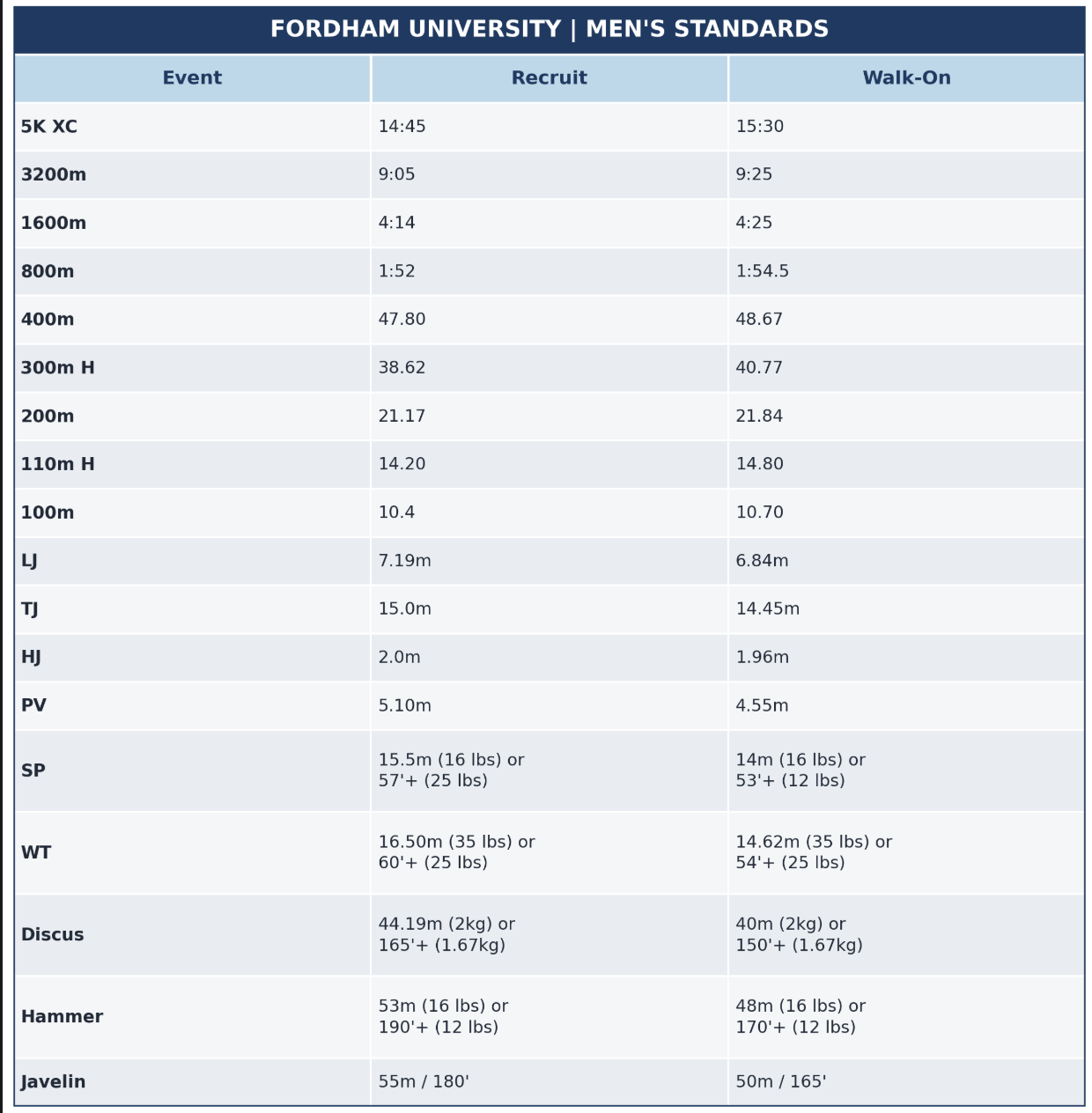
Fordham Men’s Track and Field Recruiting Standards
The following benchmarks provide a general guide for what it typically takes to be considered as a recruit or potential walk-on for Fordham’s men’s track and field and cross country program.
Fordham Women’s Track and Field Recruiting Standards
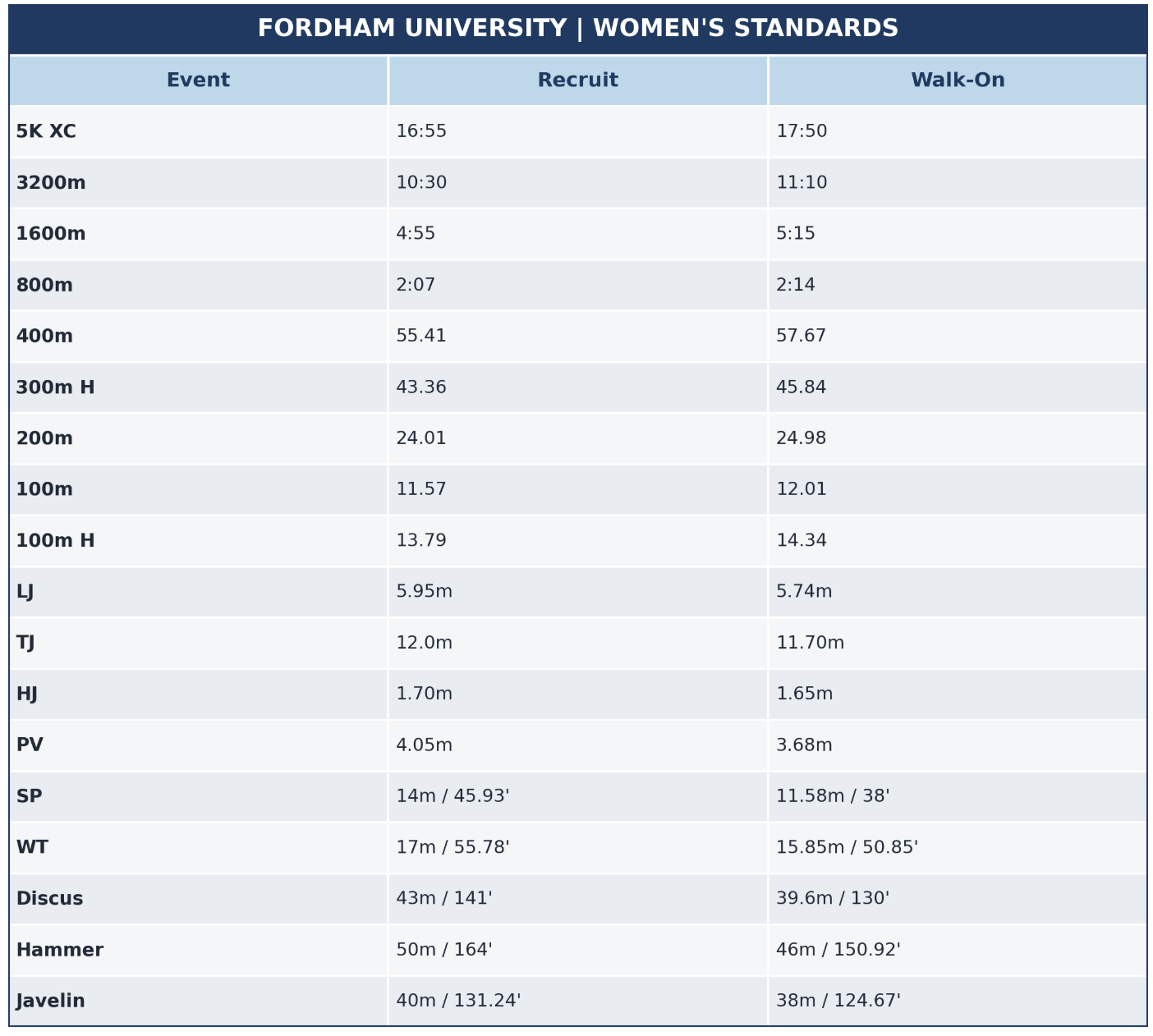
These benchmarks should be viewed as practical recruiting guidance — not guaranteed cutoffs. At the Division I level, coaches evaluate more than just raw marks. Progression, academic profile, roster need, event-group fit, and timing all play a major role in whether an athlete is a true recruiting fit for Fordham.
Fordham University Track and Field Recruiting Standards
Fordham University is an attractive option for student-athletes who want to combine strong academics, Division I competition, and the experience of living and competing in New York City. For many athletes and families, the challenge is understanding what it actually takes to be competitive in Fordham’s recruiting process.
Below, you’ll find Fordham track and field recruiting standards for both men and women, including general walk-on and recruit benchmarks across distance, middle distance, sprints, hurdles, jumps, and throws. These standards can help provide a useful starting point — but as with all Division I recruiting, context matters.
Fordham Track & Field Recruiting: What You Should Know
Fordham competes at the NCAA Division I level in the Atlantic 10 Conference, which means the recruiting landscape is significantly more competitive than many families initially realize. While the standards below are helpful, coaches do not make decisions based on raw times and marks alone.
Fordham’s staff will typically evaluate:
Current personal bests
Year-over-year progression
Event-specific upside
Strength of competition
Academic profile
Positional need within the roster
Recruiting class balance
Potential contribution to conference scoring over time
For that reason, athletes who are slightly above or below a listed standard may still be viable — or may not be — depending on the full picture.
Fordham Men’s Track and Field Recruiting Standards
The following benchmarks provide a general guide for what it typically takes to be considered as a recruit or potential walk-on for Fordham’s men’s track and field and cross country program.
Fordham Women’s Track and Field Recruiting Standards
These benchmarks should be viewed as practical recruiting guidance — not guaranteed cutoffs. At the Division I level, coaches evaluate more than just raw marks. Progression, academic profile, roster need, event-group fit, and timing all play a major role in whether an athlete is a true recruiting fit for Fordham.
Fordham Track and Field Recruiting Standards FAQ
What times do you need to run to get recruited at Fordham?
There is no single guaranteed cutoff, but athletes who are near or above Fordham’s recruit standards are generally in a stronger position to attract meaningful interest. Coaches also evaluate progression, event group need, academics, and overall upside.
Can you walk onto Fordham track and field?
Potentially, yes. Walk-on opportunities depend on roster space, event group needs, and how close an athlete is to the program’s practical walk-on benchmarks.
Are these official Fordham track and field standards?
These should be viewed as practical recruiting benchmarks intended to help families understand the level required to be competitive. They are best used as a guide, not as a guarantee.
Is Fordham a good fit for strong student-athletes?
For many athletes, yes. Fordham can be an excellent option for student-athletes seeking Division I competition, strong academics, and the advantages of being in New York City.
What Fordham’s Recruiting Standards Actually Mean
One of the biggest misconceptions in college track and field recruiting is that hitting a listed mark automatically leads to recruitment. In reality, these standards are most useful when interpreted correctly.
In broad terms:
Recruit standards generally represent marks that make an athlete more likely to draw genuine coaching interest.
Walk-on standards may indicate the level at which an athlete could potentially be considered for roster inclusion, depending on event group needs and roster flexibility.
Being close matters, especially if an athlete is improving quickly.
Timing matters — a sophomore or junior who is trending upward is viewed differently than a senior with the same marks and little room left to improve.
Academics matter, especially at schools where admissions and team fit are part of the overall conversation.
At the Division I level, especially in a strong academic environment, coaches are often asking a bigger question: Can this athlete help us in the conference, and do they fit the academic and team culture of the program?